


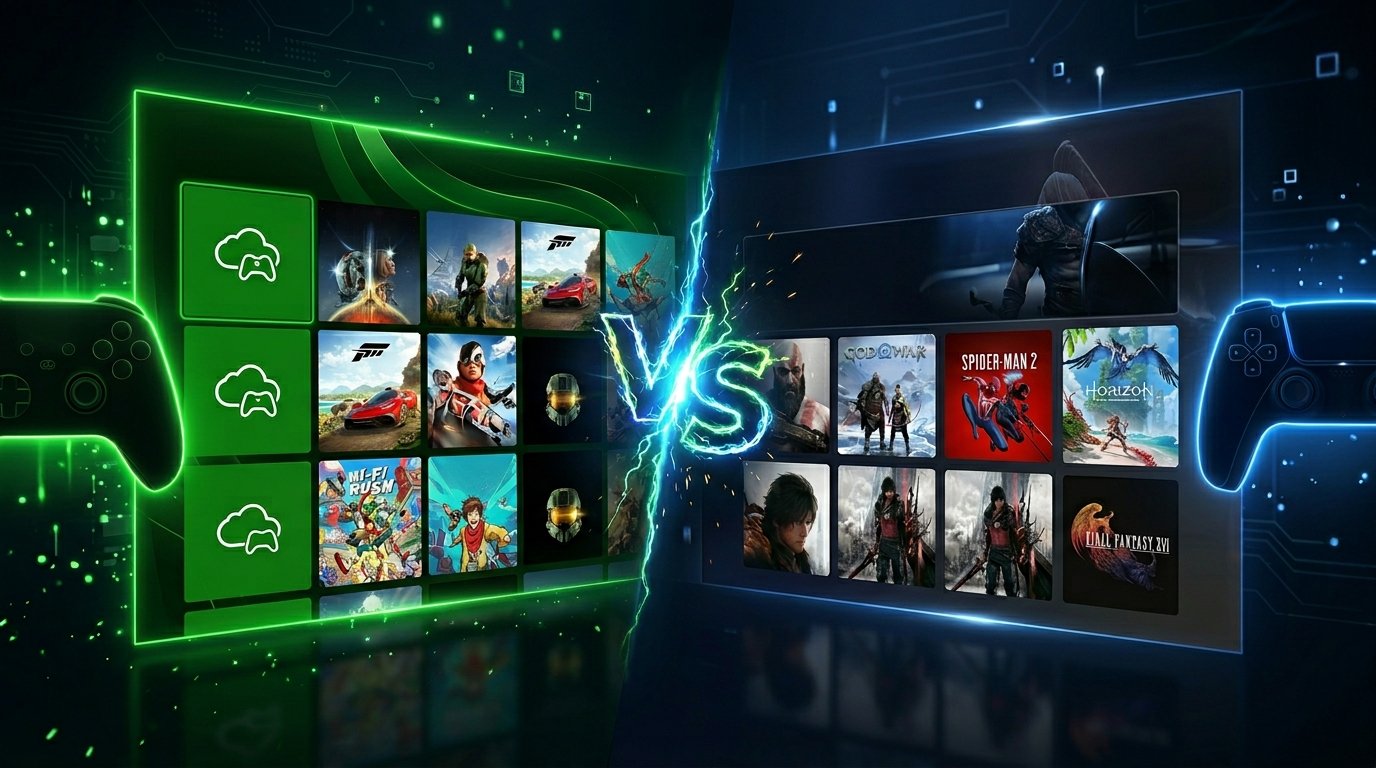

The Rise of Subscription-Based Gaming
Not long ago, building a game library meant stacks of discs, scratched cases, and the occasional heartbreak of losing your favorite title. Fast forward to today, and gaming has quietly adopted the same model that transformed movies and music—subscription services. Instead of paying $60–$70 per game, players now get access to massive libraries for a monthly fee. It feels almost too good to be true, right?
Services like Xbox Game Pass and PlayStation Plus have turned gaming into an all-you-can-play buffet. According to industry estimates, subscription gaming revenue has grown steadily year over year, with millions of active users across both platforms. The appeal is obvious: instant access, variety, and flexibility. You can jump from a racing sim to a horror game without spending extra money, which fundamentally changes how people explore games.
There’s also a psychological shift happening. Gamers are now more willing to try indie titles or genres they would normally ignore because there’s no additional cost barrier. That freedom creates a more experimental and enjoyable gaming experience. Think of it like walking into a buffet—you might discover a dish you never would have ordered off a menu.
But this convenience raises a big question: which service actually delivers the best value? That’s where things get interesting. While both Xbox Game Pass and PlayStation Plus aim to dominate this space, they approach it in very different ways.
Why Gamers Are Shifting Away from Physical Copies
Physical games still exist, sure—but they’re no longer the default choice. Convenience is the biggest driver behind this shift. With subscription services, you don’t need to swap discs, worry about storage space, or deal with damaged copies. Everything lives in your digital library, ready to download or stream instantly.
Another major factor is cost efficiency. Imagine buying five brand-new games in a year—that’s easily over $300. With a subscription service, that same money could cover an entire year (or more) of access to hundreds of games. For many players, it’s a no-brainer financially.
There’s also the issue of game discovery. Physical purchases tend to be safer choices—you buy what you already know you’ll like. But subscription services encourage exploration. You might try a quirky indie game on a whim and end up loving it. That kind of spontaneous discovery is hard to replicate with traditional buying habits.
Let’s not ignore updates and patches either. Modern games often require significant downloads anyway, even if you own the disc. So the “physical vs. digital” debate has become less about ownership and more about access. In that sense, subscription models feel like the natural evolution of gaming.
Still, some gamers hesitate. Questions about ownership, long-term access, and internet dependency linger. And that’s exactly why comparing Xbox Game Pass vs. PlayStation Plus matters—because the differences could determine which service fits your gaming lifestyle best.
Overview of Xbox Game Pass
What Is Xbox Game Pass?
If gaming subscriptions had a poster child, Xbox Game Pass would probably be it. Launched by Microsoft, this service has quickly become one of the most talked-about offerings in the gaming world. At its core, Game Pass is a rotating library of hundreds of games available for download or streaming, depending on your plan.
But here’s what really sets it apart: day-one releases. That means first-party Xbox titles—like Halo, Forza, or Starfield—are available the same day they launch, at no extra cost. For many gamers, that alone justifies the subscription fee. It’s like getting a brand-new blockbuster movie included in your streaming service the moment it hits theaters.
Game Pass isn’t limited to consoles either. With Game Pass Ultimate, players can access games on PC, Xbox consoles, and even mobile devices via cloud gaming. This cross-platform flexibility gives it a serious edge, especially for players who don’t want to be tied to a single device.
Another key feature is its integration with EA Play, which adds even more games to the library. Sports fans, in particular, benefit from access to FIFA, Madden, and other popular franchises without paying extra.
So, what’s the catch? Well, the library rotates, meaning some games eventually leave the service. That can be frustrating if you’re midway through a long RPG. Still, the constant influx of new titles often balances things out.

Key Features and Benefits of Xbox Game Pass
Day-One Releases Explained
Imagine waking up on launch day, excited for a new game, and realizing you don’t have to spend a dime to play it. That’s the magic of day-one releases on Xbox Game Pass. Microsoft has leaned heavily into this strategy, making it a cornerstone of their ecosystem.
This approach does more than just save money—it changes how players engage with new releases. There’s no hesitation or second-guessing. You can jump in immediately, try the game, and decide if it’s worth your time without financial risk. That’s a powerful shift, especially when modern games often come with mixed reviews at launch.
From a broader perspective, this model also benefits developers. More players trying a game means more feedback, more community engagement, and potentially more long-term success. It’s a win-win situation that’s reshaping the industry.
Cross-Platform Accessibility
One of Game Pass’s biggest strengths is its flexibility. Whether you’re playing on an Xbox console, a gaming PC, or even a smartphone, your progress can sync seamlessly. This creates a truly connected gaming experience.
Cloud gaming deserves special attention here. With a stable internet connection, you can stream high-quality games without needing powerful hardware. It’s like carrying an entire gaming console in your pocket. While performance can vary depending on your connection, the convenience is undeniable.
For gamers who travel frequently or share devices, this feature is a game-changer. You’re no longer tied to a single screen or location. Gaming becomes something you can do anywhere, anytime.
Overview of PlayStation Plus
What Is PlayStation Plus?
If Xbox Game Pass feels like a bold disruptor, PlayStation Plus is Sony’s carefully refined answer to a rapidly evolving gaming landscape. Originally launched as a simple online multiplayer subscription, PlayStation Plus has grown into a multi-tiered service that blends online access, free monthly games, and a deep catalog of titles across different generations.
Today, PlayStation Plus operates across three main tiers: Essential, Extra, and Premium. Each level builds on the previous one, offering more value depending on how invested you are in gaming. The Essential tier focuses on the basics—online multiplayer, monthly free games, and exclusive discounts. Step up to Extra, and you unlock a sizable catalog of PS4 and PS5 games. Go all the way to Premium, and you gain access to classic PlayStation titles, cloud streaming, and time-limited game trials.
What makes PlayStation Plus particularly appealing is Sony’s strong lineup of exclusive titles. Franchises like The Last of Us, God of War, and Spider-Man carry enormous weight in the gaming world. While these games don’t typically launch on the service day one (unlike Xbox Game Pass), they do eventually arrive, often as part of the expanding catalog.
There’s also a sense of familiarity and polish in how PlayStation Plus is presented. Sony leans heavily into curated experiences, meaning the library often feels more intentional rather than overwhelming. Instead of throwing hundreds of random titles at you, it aims to deliver a balanced mix of blockbuster hits and hidden gems.
Still, the lack of day-one releases is a sticking point for some players. It raises an important question: would you rather have instant access to new games or a carefully curated library of proven hits? That trade-off sits at the heart of the Xbox Game Pass vs. PlayStation Plus debate.
Key Features and Benefits of PlayStation Plus
Game Catalog and Classics Collection
The PlayStation Plus Game Catalog is where Sony really flexes its muscle. Available in the Extra and Premium tiers, this library includes hundreds of games spanning multiple generations. From modern PS5 titles to beloved PS4 classics, there’s a strong emphasis on quality storytelling and cinematic experiences.
What makes this catalog stand out is its focus on PlayStation exclusives. These are the kinds of games that define console generations—deep narratives, high production values, and memorable characters. If you’ve ever wanted to experience PlayStation’s greatest hits without buying each title individually, this service makes it incredibly accessible.
Then there’s the Classics Collection, available in the Premium tier. This feature taps into nostalgia by offering older titles from the PS1, PS2, and PSP eras. For long-time fans, it’s like opening a time capsule. For newer players, it’s a chance to explore gaming history.
However, the classics library isn’t perfect. Some games are available only via streaming rather than download, depending on your region. That can affect performance and accessibility, especially if your internet connection isn’t ideal. Even so, the sheer variety adds a unique dimension to PlayStation Plus that Game Pass doesn’t fully replicate.

Cloud Streaming and Trials
Cloud gaming is becoming increasingly important, and PlayStation Plus Premium includes this feature as part of its offering. It allows players to stream games directly without downloading them, saving both time and storage space. While it may not be as widely praised as Xbox’s cloud gaming implementation, it still provides a valuable option for those who want instant access.
Another standout feature is game trials. These let you play select full games for a limited time before deciding whether to purchase them. It’s a smart middle ground between demos and full access, giving players a meaningful taste of the experience.
Think of it like test-driving a car—you get a feel for how it handles before committing. In an era where games can cost upwards of $70, that kind of trial system adds real value.
That said, cloud performance can vary, and trials are limited to specific titles. These aren’t deal-breakers, but they do highlight how PlayStation Plus takes a slightly more cautious approach compared to the aggressive, all-in strategy of Xbox Game Pass.

Pricing Comparison
Xbox Game Pass Pricing Tiers
When it comes to pricing, Xbox Game Pass keeps things relatively straightforward while still offering flexibility. There are multiple tiers designed to fit different types of players, but the most popular option is undoubtedly Game Pass Ultimate.
Here’s a quick breakdown:
| Plan | Price (Approx.) | Features |
|---|---|---|
| Console | $10.99/month | Access to console game library |
| PC Game Pass | $9.99/month | Access to PC game library |
| Ultimate | $16.99/month | Console + PC + Cloud + EA Play |
The real value lies in the Ultimate plan. For a slightly higher monthly fee, you get access across multiple platforms, cloud gaming, and additional perks like EA Play. When you factor in day-one releases, the value proposition becomes even stronger.
Let’s put it into perspective. A single new AAA game can cost around $70. If you play just three new releases in a year through Game Pass, you’ve already saved more than the annual subscription cost. That’s before even considering the hundreds of other games included.
However, it’s worth noting that prices have gradually increased over time. While still competitive, the long-term cost can add up if you stay subscribed for years. Even so, for active gamers, the value remains hard to beat.
PlayStation Plus Pricing Tiers
Sony takes a slightly different approach with PlayStation Plus, offering a tiered system that caters to varying levels of engagement. Each tier builds on the previous one, giving players the option to scale their subscription based on their needs.
| Plan | Price (Approx.) | Features |
|---|---|---|
| Essential | $9.99/month | Online multiplayer + monthly games |
| Extra | $14.99/month | Game catalog access |
| Premium | $17.99/month | Classics + cloud streaming + trials |
At first glance, PlayStation Plus Premium is slightly more expensive than Game Pass Ultimate. However, the value depends heavily on what you’re looking for. If you’re interested in classic games and curated experiences, the Premium tier offers something unique.
The Extra tier is often considered the sweet spot. It provides access to a large game catalog without the higher cost of Premium. For many players, this strikes the perfect balance between affordability and content.
Still, the absence of day-one releases can make the pricing feel less compelling compared to Xbox Game Pass. You’re essentially paying for access to existing titles rather than immediate access to new ones.
Game Library Comparison
Variety and Quality of Games
When comparing Xbox Game Pass vs. PlayStation Plus, the game library is where things get truly interesting. Both services offer hundreds of titles, but the way those libraries are built—and what they prioritize—differs significantly.
Xbox Game Pass leans heavily into variety and constant rotation. You’ll find everything from indie experiments to major AAA blockbusters. The library changes frequently, which keeps things fresh but can also feel a bit unpredictable. One month you’re exploring a new RPG, and the next it’s gone.
PlayStation Plus, on the other hand, emphasizes consistency and curation. The catalog feels more stable, with a strong focus on critically acclaimed titles. It’s less about quantity and more about delivering a reliable selection of high-quality experiences.
In terms of sheer numbers, Game Pass often has the edge. But numbers don’t always tell the full story. If you value storytelling and polished exclusives, PlayStation Plus might feel more satisfying.
Exclusive Titles and Franchises
Exclusives are the backbone of any gaming platform, and this is where personal preference plays a huge role. Xbox Game Pass gives you immediate access to Microsoft’s first-party titles, including franchises like Halo, Forza, and Gears of War.
PlayStation Plus counters with some of the most iconic exclusives in gaming history. Titles like God of War, Horizon, and Uncharted are widely regarded as industry benchmarks.
The key difference? Timing. Xbox delivers its exclusives on day one, while PlayStation adds them later. If you’re someone who wants to be part of the launch-day excitement, Game Pass has a clear advantage.
But if you’re patient and care more about experiencing the best games eventually, PlayStation Plus still delivers exceptional value.

Performance and User Experience
Interface and Ease of Use
When you’re spending hours browsing, downloading, and jumping between games, the interface isn’t just a minor detail—it becomes part of the overall experience. A clunky system can turn even the best game library into a frustrating maze. So how do Xbox Game Pass vs. PlayStation Plus stack up in terms of usability?
Xbox Game Pass leans into a modern, content-first interface that feels a lot like streaming platforms such as Netflix. You’re greeted with rows of recommendations, recently added titles, trending games, and personalized suggestions based on your play habits. It’s designed to keep you discovering new content constantly. While that sounds great, it can sometimes feel overwhelming, especially for new users who aren’t sure what they’re looking for. There’s a lot happening on the screen, and not all of it feels intuitive at first glance.
PlayStation Plus takes a more minimalist and structured approach. Sony integrates the service directly into the PlayStation dashboard, making navigation feel seamless and familiar. The layout is cleaner, with clear categories and less visual clutter. It doesn’t bombard you with as many suggestions, which can actually make browsing feel calmer and more focused.
There’s also a difference in how both platforms handle game discovery. Xbox relies heavily on algorithms and dynamic recommendations, while PlayStation emphasizes curated lists and editorial-style collections. One feels like exploring a massive digital store; the other feels like walking through a carefully arranged gallery.
Ultimately, the “better” interface depends on your personality. Do you enjoy endless scrolling and discovering hidden gems through recommendations? Or do you prefer a more guided, straightforward experience? Neither approach is objectively superior—but they create very different vibes.
Download vs. Streaming Performance
Performance is where theory meets reality. It doesn’t matter how impressive a service looks on paper—if games don’t run smoothly, the experience falls apart quickly.
Xbox Game Pass, particularly through Game Pass Ultimate, offers both downloads and cloud streaming. Downloading games locally provides the best performance, as expected, with fast load times and stable frame rates depending on your hardware. Cloud gaming, however, is where things get interesting. Microsoft has invested heavily in this area, and it shows. With a strong internet connection, streaming feels surprisingly responsive, even on mobile devices.
That said, cloud gaming isn’t perfect. Latency can creep in, especially in fast-paced games like shooters or fighting titles. It’s playable, but not always ideal for competitive scenarios. Think of it as a convenience feature rather than a full replacement for local gaming.
PlayStation Plus Premium also offers cloud streaming, but its performance has historically been less consistent. While Sony has made improvements, the experience can vary significantly depending on your region and connection quality. Downloading games is still the preferred method for most players.
One subtle advantage for PlayStation is its optimization for exclusive titles. Since Sony develops many of its games specifically for its hardware, performance often feels more polished and stable when played locally.
In short, if cloud gaming is a major priority, Xbox Game Pass currently holds the edge. But if you primarily download and play games on your console, both services deliver solid performance overall.
Pros and Cons Table
| Feature | Xbox Game Pass | PlayStation Plus |
|---|---|---|
| Day-One Releases | Yes (major advantage) | No |
| Game Library Size | विशाल and frequently updated | Large but more curated |
| Exclusive Titles | Strong but fewer iconic hits | Industry-leading exclusives |
| Cloud Gaming | Advanced and widely supported | Available but less consistent |
| Pricing Value | Excellent for frequent players | Good, especially Extra tier |
| User Interface | Dynamic but sometimes cluttered | Clean and intuitive |
| Classic Games | Limited retro focus | Strong classics catalog |
| Cross-Platform Play | Extensive (console, PC, mobile) | Mostly console-focused |
This comparison highlights a key truth: neither service is universally better—they simply excel in different areas.
Which Service Is Better for Different Gamers?
Casual Gamers
If you’re someone who plays games occasionally—maybe on weekends or during free evenings—your priorities likely revolve around simplicity, affordability, and easy access to fun titles. You probably don’t need every new release the moment it drops, and you’re less concerned about squeezing maximum value out of every dollar.
For casual gamers, PlayStation Plus Extra often feels like the better fit. The curated catalog means you’re not wasting time scrolling through hundreds of unfamiliar titles. Instead, you get a selection of proven, high-quality games that are easy to jump into. It’s a bit like having a friend recommend only the best movies instead of handing you an endless list.
The monthly free games included in the Essential tier also add a nice bonus. Even if you don’t play often, you’re steadily building a library over time. That sense of ownership—even in a subscription model—can be surprisingly satisfying.
Xbox Game Pass is still a strong option, especially if you enjoy experimenting with different genres. But its constantly rotating library and overwhelming selection might feel like overkill if you’re only playing a few hours a week.
So, for casual players who want a low-pressure, high-quality gaming experience, PlayStation Plus edges ahead.
Hardcore and Competitive Gamers
Now, if gaming is more than just a hobby—if it’s your primary form of entertainment or even a competitive pursuit—the equation changes completely.
Hardcore gamers tend to value access, variety, and staying up to date with the latest releases. This is where Xbox Game Pass truly shines. The ability to play major titles on day one without paying extra is a massive advantage. You’re always part of the conversation, always exploring what’s new.
The cross-platform ecosystem is another big win. Being able to switch between console, PC, and cloud gaming creates a level of flexibility that’s hard to ignore. Whether you’re grinding achievements on your console or squeezing in a quick session on your phone, Game Pass adapts to your lifestyle.
There’s also the sheer volume of content. If you’re the kind of player who finishes games quickly and moves on to the next, Game Pass ensures you’ll never run out of options.
PlayStation Plus still has value for hardcore players, particularly those who prioritize narrative-driven exclusives. But if you want constant access to fresh content and maximum flexibility, Xbox Game Pass is the clear winner in this category.
Final Verdict: Xbox Game Pass vs. PlayStation Plus
Choosing between Xbox Game Pass and PlayStation Plus isn’t about picking a universally “better” service—it’s about understanding what kind of gamer you are.
Xbox Game Pass feels like the future of gaming. It’s bold, flexible, and packed with value, especially with its day-one releases and cross-platform accessibility. It’s the service that encourages experimentation, discovery, and constant engagement.
PlayStation Plus, on the other hand, feels like a refined, curated experience. It prioritizes quality over quantity and leans heavily on Sony’s unmatched lineup of exclusives. It’s less about overwhelming you with options and more about delivering memorable gaming moments.
If you want maximum value and instant access to new games, Xbox Game Pass is hard to beat. If you care more about polished experiences and iconic titles, PlayStation Plus holds its ground remarkably well.
Conclusion
The battle between Xbox Game Pass vs. PlayStation Plus reflects a larger shift in how we consume games. Ownership is gradually giving way to access, and players now expect flexibility, variety, and value all rolled into one.
Both services succeed in delivering those expectations—but in very different ways. Xbox Game Pass acts like an ever-expanding playground, constantly inviting you to try something new. PlayStation Plus feels more like a curated museum, showcasing some of the finest experiences gaming has to offer.
There’s no wrong choice here. In fact, many gamers end up using both services to get the best of both worlds. It ultimately comes down to your preferences, habits, and what you value most in your gaming experience.
FAQs
1. Is Xbox Game Pass better than PlayStation Plus?
It depends on your priorities. Xbox Game Pass offers better value for frequent players and day-one releases, while PlayStation Plus excels in exclusive titles and curated content.
2. Can you use Xbox Game Pass on PlayStation consoles?
No, Xbox Game Pass is exclusive to the Xbox ecosystem, including PC and cloud-supported devices.
3. Which service is cheaper overall?
Both services are similarly priced at the top tier, but Game Pass often provides more value due to its inclusion of new releases.
4. Do games stay forever on these services?
No, both platforms rotate their libraries. Some games are removed over time, though first-party titles on Game Pass tend to stay longer.
5. Is cloud gaming reliable on both platforms?
Xbox Game Pass currently offers a more consistent cloud gaming experience, though PlayStation Plus continues to improve.